Can you believe we’re already nearing the end of another year? Christmas is right around the corner, and for those who know me well, it’s no secret that this season is one of my absolute favourites. As the holidays approach and offices across the country prepare for their annual festivities, my thoughts naturally turn to one of the season’s key considerations—entertainment expenses.
It’s easy to assume that any money spent in the name of business automatically counts as a tax deduction. But when it comes to entertainment, the rules aren’t always that simple. So, let’s explore how to navigate the world of entertainment expenses and make sure your festive spending works in your business’s favour.
What exactly are Entertainment Expenses?
Throughout the year, you may find yourselves providing your employees with food and drinks, gifts, and fun activities. These expenses all fall under the category of entertainment expenses for your business.
What falls under the category of Entertainment Expenses?
In the world of pharmacy and many other businesses, a wide range of expenses can be considered entertainment-related, including but not limited to:
Christmas parties
Gifts – Christmas, birthday, farewells, baby, appreciation gifts, etc.
Staff amenities
Morning and afternoon teas
Team lunches and dinners
Food and drinks provided during training
Bonus/rewards and recognition functions
Coffee and lunch meetings
What important aspects of Entertainment Expenses should I be aware of?
Despite appearing as straightforward deductions, entertainment expenses can significantly impact various tax items, including:
1. Deductibility:
In your accounts, entertainment expenses are deductible in your profit and loss statement if they're related to your business. However, the taxable deduction might differ.
2. FBT (Fringe Benefit Tax):
FBT is a tax paid by business owners for certain benefits provided to employees and family members, including current, future, and past employees. When dealing with entertainment expenses, it's essential to address these questions:
Who, What, When, Where, and Why - The critical factors in determining the legitimacy of entertainment expenses.
Exemptions - Some expenses may be exempt, such as the minor benefits exemption, applicable when the entertainment value is less than $300 GST inclusive per employee, and the expenses aren't frequent and irregular.
Records - Maintain meticulous records always to determine the correct tax treatment and for any audit purposes.
3. Income Tax:
Except when entertainment is subject to FBT, entertainment expenses are typically not tax-deductible. However, light refreshments provided on business premises for sustenance do qualify as deductible for tax purposes.
4. GST (Goods and Services Tax):
Claim GST only if FBT is applicable and if the expenses are income tax-deductible (e.g., light refreshments consumed on business premises).
Celebrate Smart and Spread the Cheer
While not every entertainment expense is tax-deductible, that doesn’t mean you should hold back from celebrating your team’s hard work. After all, your employees are the heart of your business, and thoughtful rewards can go a long way in boosting morale and strengthening team spirit.
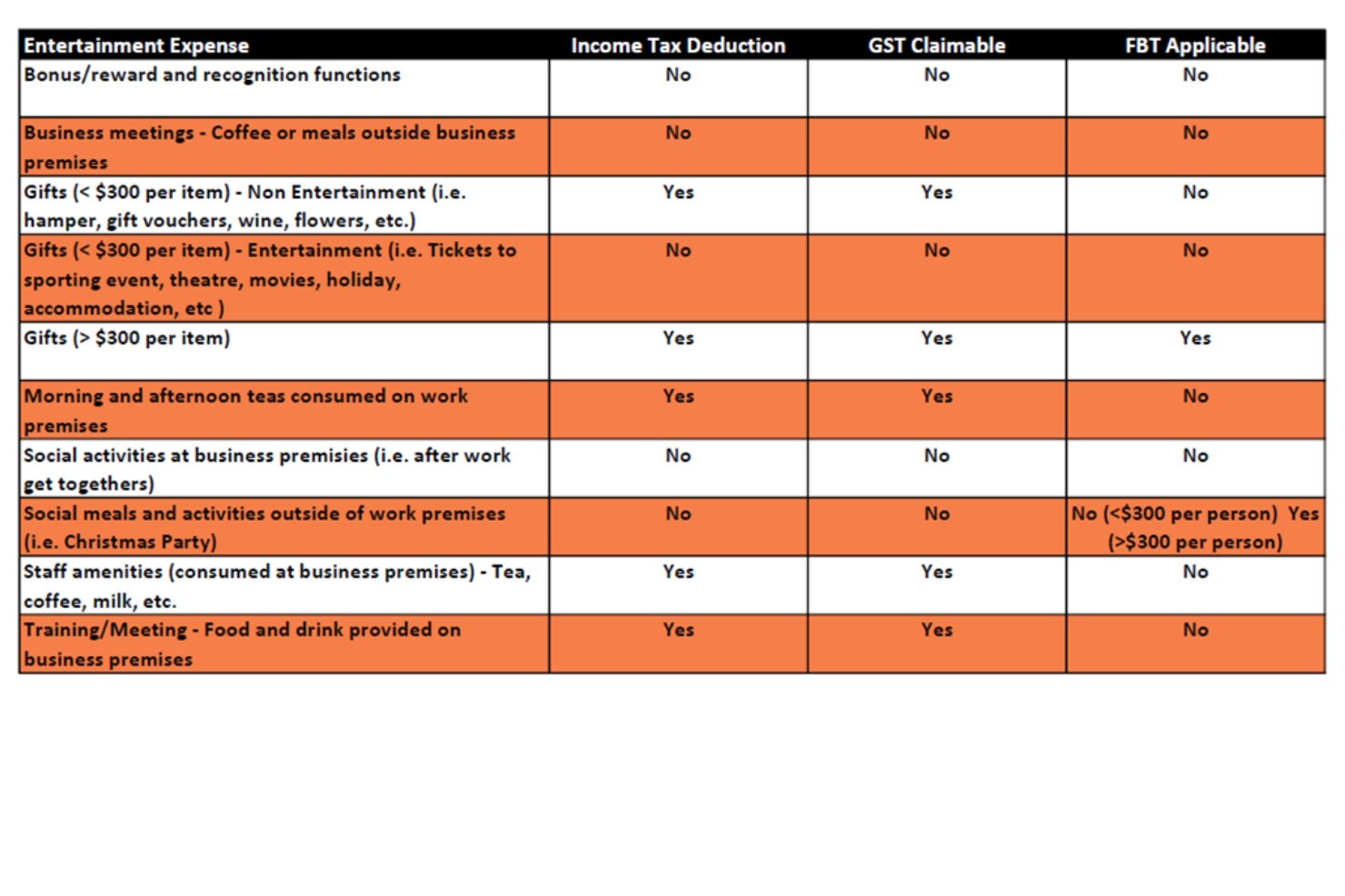
As the Christmas season approaches, I’ve put together a quick guide summarising common entertainment expenses and how they’re typically treated for tax purposes—particularly within the pharmacy industry. And remember, when in doubt, always check with your accountant to ensure you’re handling your entertainment expenses correctly for your unique business.